|
Home |
 |
Turning Cured Tobacco into a Respectable Aromatic
Well, I finally stumbled into a process to turn a cured tobacco into a respectable aromatic, and I definitely wanted to share it.
I'm starting with an air cured Burley, but any good, robust tobacco should work, just so long as it's reasonably smokable to begin with.
You will notice from the pictures that I'm using a substantial amount of stem material because it adds a lot of bulk to the tobacco, slows down the burning process, and adds a little bit of tannin to the flavor, which I really like. (FWIW, tannins are antioxidants.)
One nice thing about pipes is that you can smoke dang near anything that fits down inside the tobacco chamber, so why not make good use of that fact, right?... waste not, want not.
What you will need:
- Some sort of heat source that allows you to cook your tobacco outdoors (gas grill, camp stove, etc. I am fortunate to have a stove on our patio that we cook on in the summer months.)
- An old pot or pan to cook your tobacco in (no lid, just the pot)
- 4 cups of cured tobacco (3.88 ounces or 110 grams)
- Measuring cup or scale to measure your tobacco with
- 4-5 tablespoons (75 cc) of vanilla extract (real vanilla extract, not the imitation stuff, and preferably one that's more water than alcohol, I think)
- Tablespoon or other liquid measuring device
- Bigger spoon to stir with
- Resealable container to store your tobacco in when you're done

I am working with 4-cup batches of tobacco because that works for me, but you can use whatever amount works for you. Because of all of the air present in a "cup" of tobacco, I thought it was a good idea to also measure 4 cups of tobacco by weight, for scientific purposes, and 4 cups of my Burley weighs 3.88 ounces (110 grams).
Here you can see some of the stems in my tobacco. I used to remove these things, but now I keep them. They are pretty twiggy at this stage, but after roasting and before re-moistening, they will be bone-dry and you could easily crush them all the way down to powder if you wanted to.

Start off with just the tobacco, put 4 cups of it in the pot, nothing else, turn on the burner, and start roasting your tobacco. You want to be right there stirring with your spoon from the very beginning, because this part of the process goes pretty fast-and-furious, and it's completed in less than 10 minutes. So don't wander off, or you will come back to find a nice rolling blaze and/or ashes where your tobacco used to be.

You will start to see the first wisps of smoke within a minute.

And once it really starts smoking, you want to slide the pot away from your heat source and continue stirring until the smoke dies back down. This smoke smells a lot like burning popcorn with some other more astringent stuff mixed in. I would say that if you're going to be doing very much of this, it probably wouldn't hurt to wear a respirator for this step of the process.

Evaluate how roasted your tobacco has become and slide the pot back on your heat source if you decide you want your tobacco a little more roasted. I usually do this 2-3 times until I am satisfied with the degree of roasting.

Back off again.
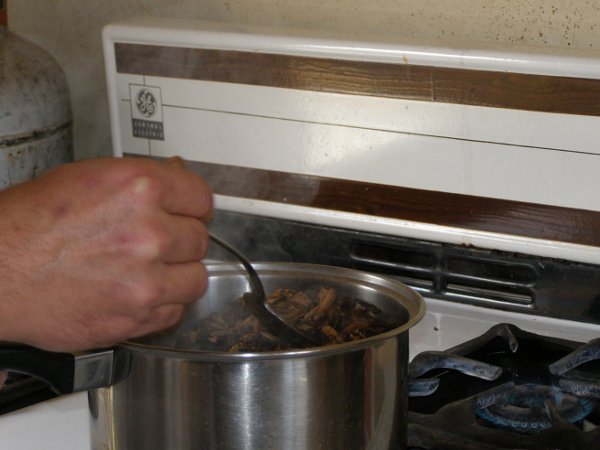
This is looking pretty good to me. Time to turn off the heat.
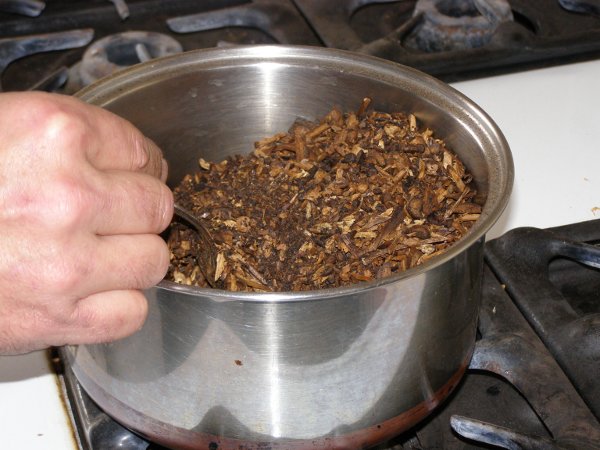
Okay, now those pieces of stem. Because they are more buoyant in the mix, they "float" to the top if you shake your pan around a bit, and that makes them fairly easy to dig out.

Give them a little pinching action.

And they will look like this.

Go through and break up the bigger pieces, and you should wind up with something like this.
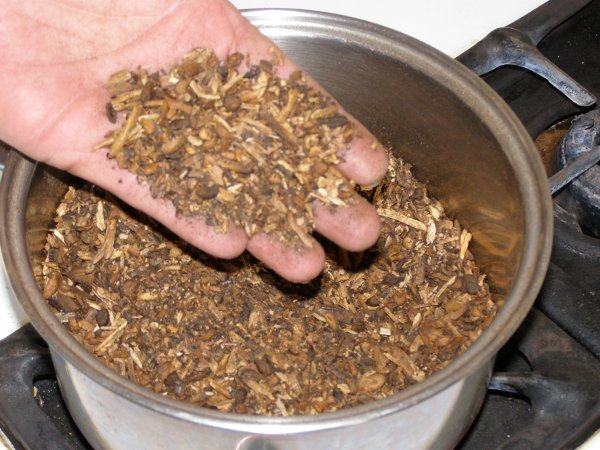
Now it's time to get out our vanilla and tablespoon.
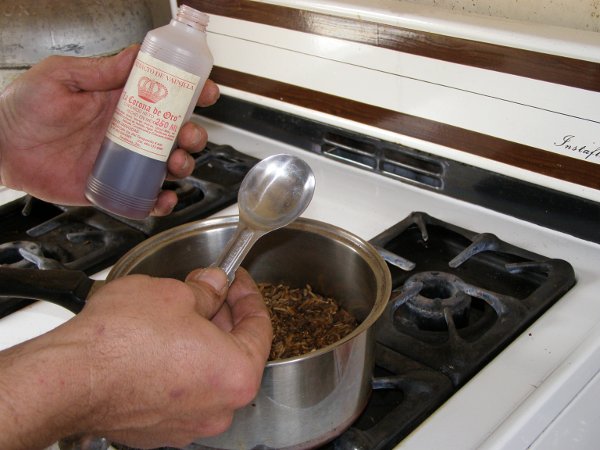
This particular brand of vanilla is mostly water, and it's not the strongest vanilla extract I have ever tasted. For better or for worse, it has some sort of preservative ... and a tiny bit of artificial color, for reasons I can't even imagine. But this is what I have in my kitchen right now, so this is what I'm using.
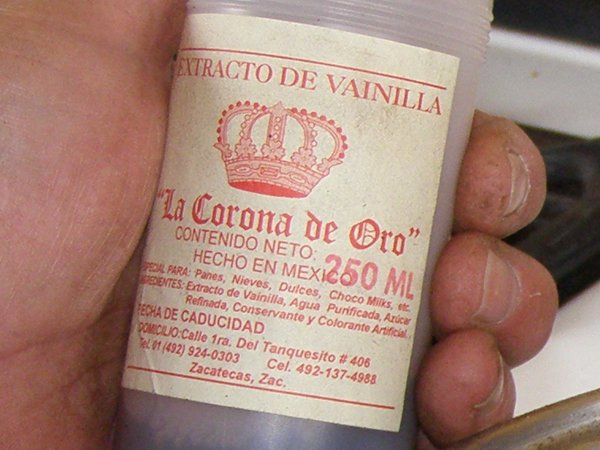
Because this is not terribly strong vanilla extract, I found that 5 tablespoons of this particular vanilla extract (75 cc) for 4 cups (110 grams) of tobacco worked well, but your mileage may vary.
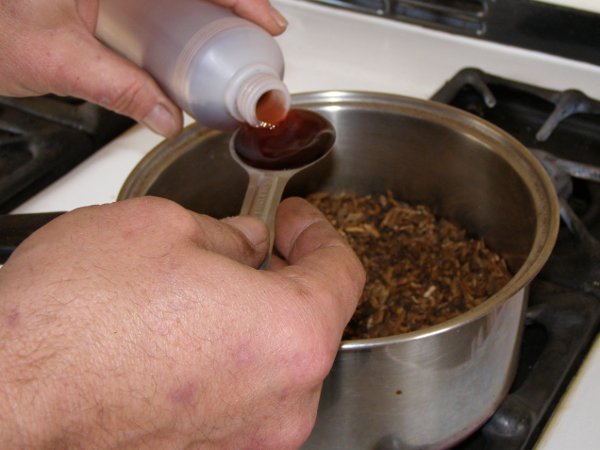
If you have stronger vanilla extract, you might want to try 3 tablespoons of vanilla extract and 1 or 2 tablespoons of water, or whatever. You will have to play around a bit until you really hit your mark. But 5 tablespoons of vanilla extract per 4 cups of tobacco worked for me.
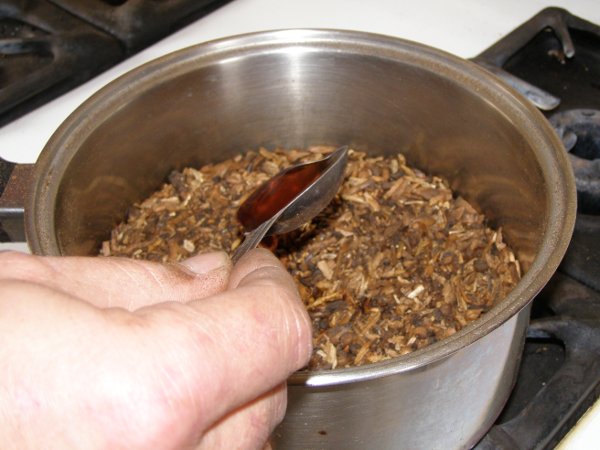
Stir it around.
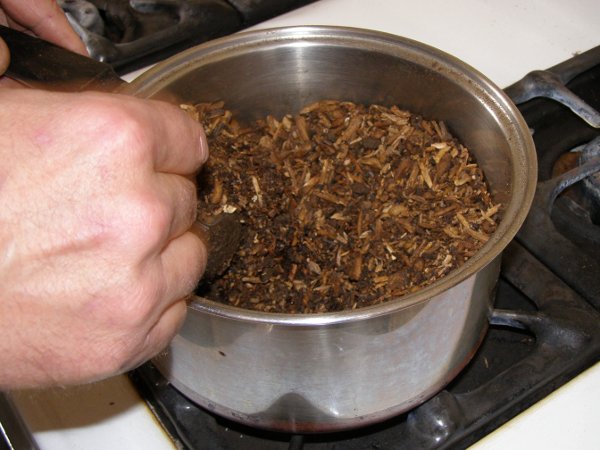
And you should end up with something like this. If you smoke aromatics like I do, this should look pretty familiar, huh?

Put your tobacco into a resealable container, and about all that's left is giving that vanilla extract, burnt popcorn smell, and inherent tobacco aroma a day or two to "marry". This is where the magic occurs.
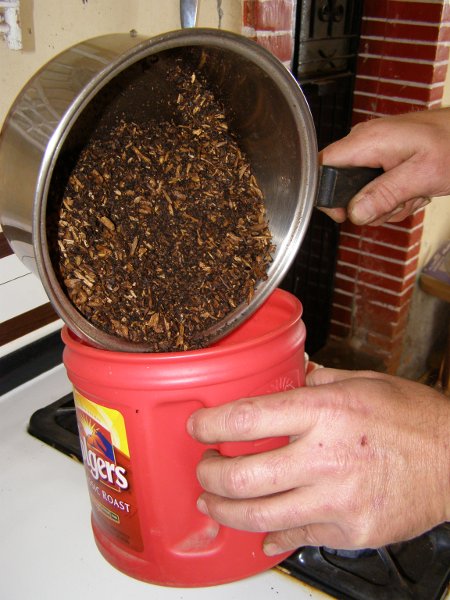
During the first 24 hours, you will be able to easily distinguish the aromas of vanilla and burnt popcorn ... oookkkaaayyy ... but after a day or two, you will stick your nose into that container and smell ... wow ... aromatic tobacco ... wow ... that's like ... the real deal.
And your tobacco will seem terribly damp to the touch, at first, but as that vanilla extract soaks into the bigger chunks, it will start to feel more and more like any aromatic that you are used to.
I am really amazed at how close this stuff tastes to my all-time favorite tobacco: Lane RLP-6. Yeah, it turned out pretty respectably, I must say. And it has a really nice room note, you know. Don't be a bit surprised if your family and friends actually ask you to smoke around them.
Seriously.
Addendum: I have a couple updates to the original discussion that I wanted to pass along.
First, the vanilla extract that I originally used in this recipe had a little bit of sugar in it, which seemed to work out very well.
However, after I used up the last of that vanilla extract, I decided to try a different vanilla extract that had a stronger vanilla flavor but didn't have any sugar, and the resulting tobacco ended up being a little on the bitter side, compared to the tobacco made with the first vanilla extract.
But I tossed some unrefined sugar -- just plain old granulated sugar -- into the mix at the same time I was adding the vanilla extract, and it really worked out well. It tilted the flavor away from being somewhat bitter to being much more balanced, and it seemed to improve the burning quality of the tobacco. Think "casing".
So the recipe I'm working with now is:
- 110 grams of tobacco (4 cups)
- 5 tablespoons of vanilla extract (the kind with no added sugar), and
- 2 tablespoons of granulated sugar
I know it sounds crazy, just plain old sugar being tossed into the mix, but try it, you'll like it. Think "old fashioned vanilla ice cream topped with roasted marshmallows".
The second thing I wanted to mention is that the moisture level on this aromatic tobacco seems to work out well for long-term storage, but it can be a little bit on the damp side in the short-term.
But I figured out that if you take a good handful -- maybe a quarter cup -- put it on a coffee filter or paper towel, and put it in the microwave for 15 seconds (YMMV), it releases just enough moisture to make it smoke flawlessly.
I am still trying to decide, but it might even improve the flavor just a bit. It certainly doesn't lose anything, anyway.
I think this works much better than leaving tobacco lying around in open air to dry for an extended period of time because: A) dust doesn't have time to settle on the tobacco if you just pop it in the microwave for a few seconds; and B) less of the vanilla flavor has time to oxidize, evaporate, or whatever.
Buen provecho.